On UBI, UBW, and UEW
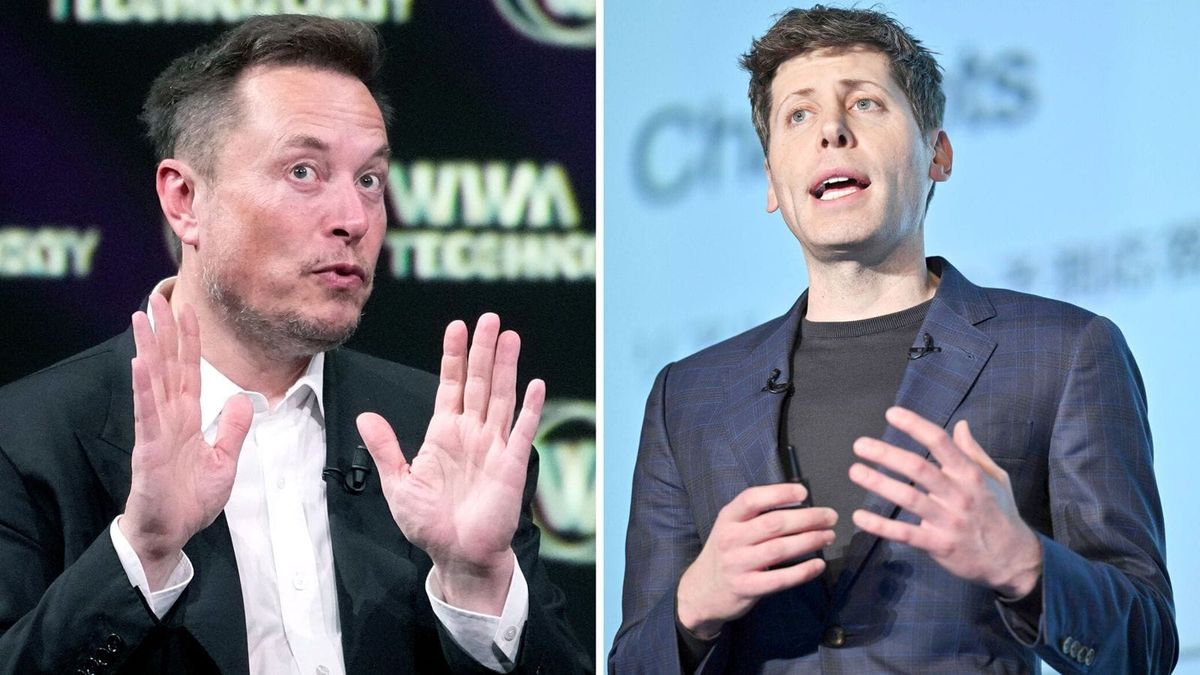
You’d be hard-pressed to find a tech CEO who doesn’t like UBI.
Elon Musk tweeted, “Universal HIGH INCOME via checks issued by the Federal government is the best way to deal with unemployment caused by AI.” (He also claimed, “There will be no poverty in the future, and so no need to save money”). Jack Dorsey announced his $3M contribution to fund UBI programs “in cities across the country”, saying, “This is one tool to close the wealth and income gap, level systemic race and gender inequalities, and create economic security for families”. Back in 2017, Mark Zuckerberg mentioned, at his Harvard commencement address, that “We should explore ideas like universal basic income to make sure that everyone has a cushion to try new ideas.”
Sam Altman has, apparently, moved past UBI to UBW, or even UEW. In an interview with Theo Von, he said, “I used to be really excited about things like UBI…What I would want is, like, an ownership share in whatever the AI creates — that I feel like I'm participating in this thing that's going to compound and get more valuable over time…[I think] universal basic wealth [is] better than universal basic income. And I think I don't like basic either. I want, like, universal extreme wealth for everybody.”
The list of supporters of UBI, according to Wikipedia, ranges from Dan Savage to Charles Murray; Angus Deaton and Robert Reich to Greg Mankiw; and Joe Rogan to Keith Ellison and Andy Stern. Although the list skews right-wing (and wealthy), even some Democrats are UBI-curious.
I find all of this strange, for a few reasons.
For one, the math on UBI is simply terrible. Let’s imagine we tried to find UBI as a new program, using incremental revenue from a (hopefully progressive) tax.
There are over 300 million Americans today. Suppose UBI provided everyone with $10,000 a year. That would cost more than $3 trillion a year — and $30 trillion to $40 trillion over ten years.
This single-year figure equals more than three-fourths of the entire yearly federal budget — and double the entire budget outside Social Security, Medicare, defense, and interest payments. It’s also equal to close to 100 percent of all tax revenue the federal government collects.
(Note: This calculation appears to exclude payroll taxes, which fund Medicare and Social Security.)
To reiterate — even if we increased income and payroll tax revenue by 100%, which would likely require a tax hike of more than 100% in relative terms, we would at best be able to provide everyone with an income of $10k. That is less than 2/3rds of the federal poverty level for a household of 1 (although, to be fair, the combined UBI payments for a household of 3+ would exceed the FPL for that household size). More realistic would be an increase of less than half that size (i.e., <$5k per person), which starts to sound much less than “basic”. (These amounts might make sense as a supplement to other sources of income, but not as a replacement for income in the case of “unemployment caused by AI”.)
If funding UBI by raising taxes is bad, funding UBI without raising taxes is even worse. One idea is to use UBI as a replacement for the existing safety net, and to fund UBI by closing down these programs. (This is also the reason UBI has so many right-wing and libertarian supporters.) These are means-tested programs such as Medicaid, SNAP (food stamps), TANF, Section 8, and so on. Perhaps surprisingly, these programs make up a relatively small portion of the federal budget. Defense, interest payments, and Social Security and Medicare are ~70% of the budget. Assuming, optimistically, that we could abolish the remaining 30% and replace it with UBI, that would amount to only $6000 per American, far short of “basic income”.
The math gets even worse when you omit Medicaid. According to CBPP, “Ed Dolan, who favors UBI, has calculated that we could finance it by using the proceeds from eliminating all means-tested programs outside health care — including Pell Grants, job training, Head Start, free school lunches, and the like, as well as refundable tax credits, SNAP, SSI, low-income housing programs, etc. The result, Dolan found, would be an annual UBI of $1,582 per person, well below the level of support most low-income families (especially working-poor families with children) now receive.”
Suppose we did what the libertarians wanted. Would it even be a good idea? One obvious consequence, when you think about it, is that this change would be regressive. Replacing a means-tested payment with a universal one necessarily means taking money from poor people and giving it to middle-class and rich people. Unless these means-tested programs suffer from massive inefficiencies, waste, and fraud (and, spoiler alert, they don’t), the neediest would end up with less, not more. That’s how you arrive at $1582 per person after dismantling the safety net that provides thousands or tens of thousands in value to those worst off.
Moreover: if anything, the efficiencies run in the opposite direction. Dismantling Medicaid and using it to fund UBI would probably make everyone worse off. Medicaid can negotiate with healthcare providers to lower medical expenses. An “equivalent” cash benefit would provide far less healthcare, since it would be subject to the original, sticker price. (Read a hospital bill before insurance company “adjustments”, if you’re curious.)
Funding UBI with taxes would require unimaginable tax increases. And funding UBI by dismantling the existing safety net would only worsen poverty. If the math is bad for UBI, is it any better for wealth — UBW or UEW? Perhaps. But it depends a lot on how much redistribution you’re willing to do.
Proposals like “Trump accounts” or, more hilariously, Musk’s “SpaceX shares for every kid” are unlikely to lead to basic wealth, let alone “extreme”. The amounts are simply too small. It is very challenging to use the federal budget to fund significant amounts of wealth. There are a few reasons. The people who need the money the most will probably spend it, not save it. There is probably some inflationary effect of borrowing to give everyone a bunch of money to spend (see, for example, the pandemic era checks). And, because “flows” (income) tend to be much smaller than “stocks” (wealth), these programs would need to create an annual stream of payments, not just a one-time deposit, to lead to significant wealth accumulation.)
UBW might be funded by the government, through borrowing. But it might also be funded through taxes — more specifically, wealth taxes that redistribute wealth from those who have it to those who don’t.
Let’s say you taxed the wealth of the top 1% (roughly, households with $5M or more in wealth). The top 1% has ~$50T in wealth, in aggregate. At a rate of 20% — far higher than the rates proposed by Warren or Sanders or in California's Prop 40 — that would get you $30k per American. Definitely something, but not enough for, say, a down payment on a median home. To fund large, widespread wealth accumulation, you’d need somewhat smaller, more sustainable tax rates, extending over years, and also somehow ensure that the wealth being transferred manages to accrue and doesn’t get spent.
I’m of course being somewhat facetious. Given how vigorously tech CEOs fought against California’s wealth tax, I can't imagine they’d support a federal one. Instead, what people like Altman or Musk have in mind is that AI will lead to huge increases in productivity, GDP, national wealth, and, incidentally, valuations of their own companies (OpenAI, SpaceX, etc.). One can imagine that, in this world, universal basic wealth might be as simple as giving everyone a SpaceX share. Line goes up.
It’s hard to know what to make of these predictions, partly because they seem absurd from the economic point of view (for more on that, see here), and partly because, even if they did materialize, we would still have the problem of (re)distribution. Even Altman recognizes that small issue (”advanced AI might discover breakthroughs — from new cures for diseases to new kinds of energy and even new ways to build spaceships — though, he admitted, much of that value would flow to “cluster owners” like OpenAI.”) Elon’s “SpaceX share for everyone” proposal is more likely hype than substance. (”Musk did not provide additional details about how or when the shares would be distributed or what the recipient age cutoff may be.”) Does anyone believe he’d willingly part ways with billions, let alone trillions?
The United States is a very wealthy country. Those in the 50th-90th percentiles have an average wealth of nearly $500k; those households in the top 10% have an average wealth of over $5M. But those in the bottom 50% have very little: only $1k, on average. It is hard to imagine that these distributions would change much, at least for the better, if we, collectively, became two or ten or one hundred times wealthier. It’s more plausible that they would become worse. (Even in the last few years, as AI has driven huge increases in stock market valuations, those gains have only redounded to the top 10% of Americans, who own 93% of U.S. equities.)
My cynical take is that promises of UBI, UBW, and UEW are simply hot air. They represent attempts by our socially awkward ruling class to mollify everyone else. People like Altman and Musk want to convince you that everyone has an equal share in the future, that even if AI takes your job, you won't be left behind, and that the benefits of AI will not simply accrue to the same capitalists who always seem to get disproportionately richer.
I hope you leave with two takeaways. First, under “business as usual” assumptions, UBI and UBW will do very little of value, and will probably make things worse for the poorest Americans. Second, even in the optimistic future where AI supercharges economic development, we will only get “extreme wealth” for everyone if we take it from those who would otherwise give us scraps.


